On Monday I ran on the Bonneville Shoreline Trail in Utah along the foot of the Wasatch Mountains East of Utah Lake near Orem Utah. I did 7.92 miles and 250′ vertical after my 7+ hour drive from Colorado.
Bonneville Shoreline Trail overlooking Utah Lake. Local say BST.Movescount Stats for my BST Run on Monday
The next two days, Tuesday and Wednesday I did an Incline Treadmill workout and a couple Stairmaster Stepmill workouts. I forgot to bring my whiteboard home with my stats on it, but the Incline Treadmill was:
Console Report from my Incline Treadmill workout on Tuesday
If I remember correctly I got in over 2500′ on the Stepmill, and next time I’m in Utah I’ll get it updated here.
On Thursday I went up to the Saddle on Mount Olympus, the iconic peak prominent on the East side of the valley near the large REI store. I tried going up the gravel chute scramble to the summit, but was going two steps up and three steps back so decided that a trip to the Saddle was a good workout and returned down. I’m glad I did. That first half mile down was really hard on my knees. 5.89 miles and 3700′ of vertical.
http://instagram.com/p/oT5tfaqxWV/
Movescount Stats from Mount Olympus in Salt Lake City
That same afternoon then I returned to Colorado in a thunderstorm with lightning bolts hitting the peaks around Avon and Vail.
On Friday Morning I went out for a trip up Mount Royal, one of my favorite local steep ascents up the anvil-like prow overlooking Frisco Colorado Main Street. The trail was still under a lot of snow. It’s been a very cool wet spring here with lots of snow. An avalanche swept through the trees just left of the trail and covered an intersection and I ended up on the very steep avalanche debris and had to work hard to avoid postholing. When I neared the saddle I realized I was in the wrong drainage and tried to go over and through the trees but between the steep rough terrain and the deep snow between the pines I descended and then found the correct trail. I followed it up for a bit but then had to bail after postholing in steep wet slush like a snowcone. I did 3.34 miles and 1286′ vertical.
Avalanche debris on Mount Royal in Frisco COSnowy trail weaving through the trees on Mount Royal by Frisco COKnee deep post holing tracks on Mount Royal snowcone snowMovescount Stats for Mount Royal in Frisco CO
I kind of felt like that wasn’t quite workout enough, and was going to go for a cycle ride that Friday Evening but decided to go for a second run up the Keystone Gulch Road, one of my favorites. I wanted to go pretty fast overall, in spite of my cold (got a cold from a traveling relative that really packed up my lungs and sinus) and sore knees from Olympus (actually since a pavement run a few weeks ago my knees have been a bit troublesome). I ended up with 1.46 miles and 120′ vertical.
Keystone Gulch Road Fast Run on Friday Evening
The next day, Saturday I set a goal of 10 miles and I was curious about the Aqueduct Trail going from a pond crossing about a half mile up the road around to The Ranches subdivision above the golf course and stables. That was a blast. After bushwhacking around some snow, I was on singletrack going very quickly for a while in the area before the houses. Eventually the track gently ascended a hill about where I thought you might cross over back on top of the ridge overlooking the Gulch but it was all under water. I skirted it slowly for a while but then decided it was going to go on forever and returned to the gulch road. I came across a couple of mountain bikers who reported seeing a bear along the singletrack on their way so I took out my earbuds and took off the sunglasses just in case. At the road I headed up to a little ways past the 2 mile marker, having to leap across a 2′ runnel of water crossing the road swiftly entering the creek. I returned to the crossroad trail head with 10.21 miles and 700′ vertical gain.
Keystone Gulch 10 mile run from Saturday via MovescountThe Aqueduct pipe and trail along the cliffs heading toward the Stables at Keystone ResortSingletrack trail near The Ranches overlooking the River Run Golf Course at Keystone Resort
I ended up with 29.368 miles and 6824.03′ of vertical for this week. Add in at least 2500′ of ascent via Stairmaster and that’s over 9000′ of gain for the week. In spite of my achy knees and stuffed lungs and head. It was a great week.
I’ve been working for a couple years on and off with my Couch to Colorado 14er Training Program. This mountaineering fitness program is going on right now by Subscription only [HERE]. My group has received their first of 11 emails with the training materials that will get them hiking and to the summit by the end of the summer.
I switched over to the more generic sounding “Mountaineering Fitness” category so that I could add in other books for other objectives as time goes forward. This year I want to get people to the top of a 14er or equivalent peak. Who knows what mountaineering fitness goal I can come up with for next year?
The book, both Kindle and paperback, should be available in about a month for those who want to read it outside of the Subscription. For those in this group I’d like to share the almost final draft of my opening few chapters here.
Mountaineering Fitness results – Happy to be on top. Todd Gilles and Charles Miske after climbing Kelso Ridge on Torreys
Late in the summer of 2005 I weighed 220 pounds, mostly gained from working 60 hour weeks at a tech job. I attempted Castle Peak, a Colorado Fourteener with a road up to 12,000’ good for 4×4 vehicles. I didn’t summit, because I was really out of shape. I started out too quickly, since in my own mind I was still young and strong and fast. I got lost, lacked confidence on the rough trail near the top, and ran out of time. I didn’t have a headlamp to negotiate the trail in the dark.
A few weeks later I did manage to hike to the summit of Torreys, another Colorado Fourteener. I camped near the trailhead, got a very early start, and allowed more time to go up. Sadly, it took nearly twice as long to descend to the trailhead as it took to get to the top. Going down was really hard on my body, and I was really beat up by the time I got back to the car.
This sorry condition was frustrating to me, because just five years before I had climbed four of the 14ers in one summer, and was among the faster hikers on the trail. I guess that’s what happens when you abandon your fitness in return for success at a desk job. A long time ago I had a personal trainer certification. I had exercised off and on since I was 19. I had been a year-round bicycle commuter. I had run several 5K and 8K races and done well. I never even noticed that I had gained so much fat and become so unfit.
The next fall, 2006, after ballooning up to nearly 240 pounds, my daughter was born. When I looked at her little face, I realized that I had put my health at risk, and if I wanted to watch her grow up, I would need to make some serious changes, starting right that minute. I finally had the motivation to begin a fitness program designed to get me to the top of the mountain. With my love of hiking and climbing, I knew that if I were to focus on the rewards of trips to the mountains, I could sustain a program to return to the me I used to be. Over the next four years I lost 60 pounds, and kept it off for another four years as of this writing in Spring 2014.
During my fat loss journey I started took up several sports and adventure activities. I’ve climbed rock and ice, on glaciers and couloirs. I’ve run on the road in 10K and half marathons. I’ve run on trails in 10K, half marathon and full marathon races. I successfully ran the Qualifier for Elbrus Race 2010, and finished under the cutoff for Elbrus Race 2013. I trained the 3rd place finisher for Elbrus Race 2013, one of my proudest achievements in training an elite athlete.
I studied and experimented with several different training and eating theories. I have figured out since then how I could have sped up my progress quite a bit, and I know that in general you too can have the same results that I got, only in less time and with less effort. In this book I will focus more on the training aspects of the program. If you want more information about how to lose fat quickly using proven, sound science please check out my other book The 100 Calorie Diet Plan – a food portion control program for fast, efficient, fat loss.
We began discussing this journey with a Colorado Fourteener. Let’s start on the path to achieve that goal now, and if climbing a 14er is the carrot on your stick, then by all means, let’s get you to the top.
Me, 240 pounds, January 2008. Mountaineering Fitness fixed that quick
Disclaimer:
At one time I was a Certified Personal Trainer. I let it expire when it was obvious that I would make more money as a Tech Support Manager. I didn’t go to medical school or get a degree in any health related field. The information presented in this book is a compilation of the knowledge I gained from several different seminars I attended over the years as I studied to get my personal trainer certification, from seminars I attended as someone interested in the extremes of physical and athletic performance, as someone who had the inkling of an idea that I’d be writing this and other training plans, and from practical hands-on experience with both myself, and the athletes I consult and coach for.
I can’t promise anything, or make any claims of a medical or professional nature. Your results are up to you. I also can’t promise that you will not be injured in any way or capacity, mental or physical. I suggest that you get clearance to accept the challenge of this program from a properly licensed medical professional before you begin. If you need assistance from an Adaptive Training Specialist, please have them contact me for suggestions and advice on how to accommodate any special needs you might have.
Having assumed that you are cleared by a qualified medical professional I hope that you agree that I cannot possibly be held accountable for what you do with the information presented here, which is basically a collection of traditional workout and training methods presented in a program format that I personally feel for myself is suitably applicable to climbing one or more of the Colorado Fourteeners. As the car commercials so carefully state in the fine print “Your Mileage May Vary”. Be aware, alert, and careful not to hurt yourself in any way. I would feel bad, if nothing else.
Again, in a nutshell, no promises, no guarantees, get permission, don’t hurt yourself.
Introduction:
Do you want to climb a mountain? Have you climbed one before? Maybe when you were younger or more fit? I’m assuming you’re not all that ready to climb one now, since you’re reading this. I’m here to help you become fit enough to climb a mountain. This program is 16 weeks long. You can start it any time. I hope you never really ever quit this program. I hope you continue to grow in fitness and health. If you need to grow new muscle, I can help you. If you need to shred off some fat, I can help with that too. Even if you need to do both I can get you where you want to go. But let’s get back to that mountain now.
“The Mountains are calling and I must go.” — John Muir
If you’re wanting to do a hike on a bigger type mountain, something to prove to yourself that you have what it takes, I recommend climbing a Colorado Fourteener. Otherwise spelled 14’er or 14er according to Google. This is a peak with a summit over 14,000’ above sea level. Officially and unofficially, there are different rules to determine if it’s a “summit” or just a bump on the ridge of another big mountain. There are over 50 such mountains in Colorado. The exact number depends on which list you accept. That is only important if you’re going to try to do all of them. If you just want to have a great day out in the mountains with the potential for a beautiful view, maybe see some mountain goats or pika, and a great physical challenge, there are lots of mountains to choose from. Many of them have decent road access and a trail that most people of at least average fitness can successfully hike in a single day.
Mountaineering Fitness now allows me to run up many mountains
I noticed that there are several “Couch to…” books and guides and manuals out there. You could go to a running website and order “Couch to 5K”, “..10K”, “..Half Marathon”, “..Marathon” etc. In my mind climbing a Fourteener is roughly equivalent to running in a half marathon. Yes, thousands of people do it each week, but to someone who has never run one before, it seems rather extreme. In general a good training program during a period of 12-16 weeks could get you from the couch to finishing one. Maybe not in a great time, but finishing a half marathon is possible with about 4 months of training. Climbing a Colorado 14er with 4 months of training is realistic. I suppose that just about any similar mountain climbing goal would be quite possible in that time frame.
If you want to get off the couch and onto the top of one of the highest mountains in the Continental USA, let me help you get in shape over the next 16 weeks. Make a commitment to get on the program, and at the end test yourself. Test your fitness and endurance by hiking one of the Colorado Fourteeners
One of the first things you want to do is find out exactly where you stand physically right this minute. Or at least this week. Keep in mind that I can’t really assess you in person right now, so I’m going to have to trust you to do this for me, okay? It’s very important for both of us that you start out on the right foot.
If you want to pre-order a copy, subscribe to the blog or Like my Facebook Page for the first notice of when it will be available. You can get just the paperback or Kindle from Amazon, or generic eBook and Video files from me. Check back for when Mountaineering Fitness Book One is available.
“Being out on the edge, with everything at risk, is where you learn and grow the most.” — Jim Whittaker
“Being out on the edge, with everything at risk, is where you learn and grow the most.” — Jim Whittaker
I took Todd Gilles out ice climbing at Lincoln Falls – story HERE and HERE. I led the first pitch and ran it out to the end of a 70M rope. That left about 25M of route that I offered to him as his first lead. It was awesome being his mentor and helping him to learn how to lead.
Best of all was inspiring the confidence in him that he could lead, and was ready. He did a great job, and like the quote said, that’s where you learn and grow.
How about you? Are you going to go to the edge and beyond, risk everything and learn and grow to achieve your success?
I was reading this article HERE on T-Nation “The Death of Steady State Cardio” by Rachel Cosgrove. A very long time ago, when I was an ISSA Certified Personal Trainer I attended a trainer workshop in Las Vegas that featured a session with Alwyn Cosgrove, Rachel’s husband. I don’t remember if she was there or not now. It was a very long time ago and I was very busy taking notes from Alwyn’s presentation on client mobility assessments.
AF Canyon Half Marathon in Utah
Anyway, like most of these “Steady State Cardio” articles it tries to convince us that HIIT (High Intensity Interval Training) is the ultimate and thus only option for training of any type including long distance events, like the Half Marathon. I’ve commented a few times, and shared articles and links to articles about these training protocols. For one thing, a Half Marathon is a relatively short distance, and isn’t a good example of endurance training protocols. I think anyone who has got one under their belts would be able to keep training for them with less than 5 hours a week of running training.
My own interpretation of this kind of slamming of “Steady State Cardio” is that we’re having a difference of opinion in what that term means. Assuming you slog along at some pace for a few hours and that’s what they mean by steady state cardio, then how about slogging along for a few hours at a 6:00 pace. That’s a six minute mile pace. It’s about a 2:38 marathon or two hours and thirty eight minute marathon. Not too shabby, but not a record either. So let’s do a few hours at 6:00 and get fat, as the articles all stipulate. To be honest with you I cannot run at that pace for more than a hundred (100) yards at a time. So I can’t offer an opinion on how that feels afterward. I cannot do that as steady state cardio.
Treadmill Running at 100% HR Max (220 – AGE formula)
Fine then, let’s interpret this from the perspective of Heart Rate. Find your Max Heart Rate, and let’s just do the simple version (220 – AGE). That’s your Maximum Heart Rate (estimated). Let’s do a two hour slog at 100%. That’s steady state, right? Just adjust the speed up and down as needed to stay at that 100% for a couple hours. My graph above shows me doing just that for a little over an hour. It’s not very easy. If you don’t believe me get your cardiologists okay and go for it. Go ahead, then comment below about how fat you feel having done that. Suunto says I’ll have a metabolic effect for 46 hours afterward. That’s a lot of fat burning BTW.
HIIT – heavy weights in the gym with little rest
As a contrast, here’s my weight session with a 5 hour metabolic effect. Sweet. This is mostly supersets of squats and chinups with very little rest followed by shoulder presses and lat pulldowns. It was a great workout and I really burned the fat. 5 hours worth. Yeah. To be honest that is about 1/9 the effect of my 100% Heart Rate treadmill running workout. But I do weights because I enjoy them and they provide the support my endurance endeavors require. Running uphill requires strong legs. Climbing requires strong shoulders and back.
Steady State Cardio Roots
I think the root of the problem is that some warped peer-reviewed study of people who don’t work out found out that their fuel source wobbling along at a 60% Heart Rate was primarily fat. With fat as a fuel source you could potentially stay on the treadmill all day long burning fat at the “Steady State Cardio” rate of 60% Heart Rate ((220 – AGE) X .6). For me that’s 100 BPM (Beats Per Minute). That would totally suck to be on a treadmill at that speed for any more than a warm-up.
Anaerobic Threshold Training setup with Suunto Ambit 2S on the handle of the treadmill
One major issue with this is that as we train, our bodies adapt and it’s harder to actually accomplish anything at that heart rate. If we were to wander around on a treadmill at that Heart Rate for a couple hours we’d just be hungry and thirsty and achieve nothing for our health. These articles are correct about that, so long as they’re actually talking about this version of “Steady State Cardio” and not the previous two examples I shared.
This brings us around to the Elephant in the Room. Specificity. Steve House pointed out in his Alpine Training seminar that you have only so much time at 80% and greater Heart Rate, so your approach, maybe two hours, across steep rough terrain, carrying a 40 pound backpack, has to be done at less than that to conserve energy for the climb. You need to train walking 6 miles or so at various inclinations, carrying a 40 pound backpack, while keeping your Heart Rate around 70%. This is a sports specific training objective.
50 pound backpack on a Jacob’s Ladder is Steady State Cardio
If you analyze your sport of choice for the requirements, you will get a much better perspective on what is actually required in your training. If you’re wanting to ride a century, you’ll need to get into the groove of spending 5 or more hours in the saddle at a time. You don’t do that tossing kettlebells across the room and returning in a bear crawl dragging chains.
On the flip side, various studies have shown that there is some limited endurance effect to a HIIT protocol. Hence the Crossfitters tossing out stuff like
“you won’t be able to do a marathon, but you can have a fast 5k”
This has given rise to the whole “close enough” or “good enough” protocols like Tabata. I have experimented with Tabata, and a strict Tabata protocol is very difficult to do. I think a lot of the Tabata articles are kind of like taking Yoga at the gym from a facilitator that took a weekend workshop. I also have my doubts that anyone is going to win a SkiMo race after spending a year training for 16 minutes a week.
“Great. But I am doing a marathon” you might say.
Aspen Backcountry Marathon Finish
Some hype is being generated about various HIIT style marathon training, but so far no one (as of this writing that I am aware of) has come off the couch and finished a marathon with a good time using this methodology. All of the hype is based on majorly injured previous winners going on to good times using HIIT style training. They already have the gas in the tank so to speak from the long hours of endurance training they used to do and the HIIT training is just keeping the muscle fibers warm and ripe.
If you have read my previous article about Anaerobic Threshold Training HERE you’d see how I feel this is a great alternative to the classic maligned “Steady State Cardio” though in this style of training you’re riding a very fine line, a steady line, of your Heart Rate Target Goal. In my mind though that makes it a Steady State, though a very high state. It’s just a play on words. I wish that instead of ripping on “Steady State Cardio” they’d rip on Low HR Cardio.
It’s not Steady State Cardio that’s the problem, it’s the Low HR Cardio!
Marketing your HIIT programs though is a bit easier to do when you take advantage of how much people dislike wandering around on a treadmill for a couple hours at 60% Heart Rate. I hate doing that and I actually don’t mind being on a treadmill for two hours or so at a time.
Have I mentioned several times already that I really like treadmill interval workouts? I wrote an article [HERE] in response to an article in Runner’s World recommending against doing treadmill interval workouts. Here’s a sample:
They claim that in order to bail you need to push buttons, whereas on the track you just slow to a stop. Well, to make it apples to apples, I think you’d need to just stop moving your legs on the track to see what happens. Just kidding, don’t do that. When it comes to bailing, all you have to do is grab the handles and jump up on the frame. It takes a half of a second. – Stay Injury Free on the Treadmill (SevenSummitsBody on Blogger)
I also discuss a few treadmill form tips and how to stay motivated and beat boredom if you want to go read that article.
Treadmill Interval Workouts on an Incline Treadmill at 5 AM while the family sleeps – 2013
Back to Back Treadmill Interval Workouts
That’s what I did today, March 27, 2014. First I got on the treadmill set at 3%, did about 15 minutes of warming up at up to about 4.5 MPH (MPH easier to use on treadmills than Pace). I did a test interval of a few minutes at 6.0 MPH followed by walking at 4.0 MPH. Keep in mind that my treadmill is at 9,400′ and that I’m 54 years old. My 100% HR (based on the 220-AGE formula) is 166 BPM. I did two Anaerobic Threshold workouts already this week [EXPLANATION] and one 75% zone workout. I am not recovered from those. That will explain a little bit about the numbers to come.
After my warm-up and cool-down I did an interval of 6.0 MPH followed by 4 intervals at 6.6 MPH. I was using a very simple 1:00/1:00 pattern. A minute high and a minute low. I stayed low then for a few minutes, since I hit my 100% level and needed a short break. I prefer a bit of flexibility which is why I don’t program in an interval training session in the presets.
I then did 3 intervals of (1:00 @ 6.8 / 2:00 @ 4.0). That’s one minute at 6.8 MPH and two minutes at 4.0 MPH. I walked most of the lower speed rests for these last three. At that point, my last glance at the treadmill was that I had gone just under 50:00, like 49:34 and 3.668 miles. I accidentally pulled the safety magnet off the console and it zero’ed out and stopped. Dang. I hate that. I need to superglue the magnet on. Drat. So I rounded it to 49:00 and 3.7 miles for my stats.
I raised the deck on my NordicTrack Incline Treadmill to 32% and began walking at 2.0 MPH. Immediately I realized something was wrong and I was running at what I guessed was about 4.0 MPH. At 32% that’s running. Try it and see. Anyway, I checked the readout and it said I was going 2.0 MPH. I slowed it to 1.0 MPH but still was running at 4.0 MPH. I stopped it and continued running as the belt kept moving. Then I unplugged the treadmill to reboot. This happened before once. The controller forgets to add tension to the motor so it’s nearly freewheeling at a very steep angle.
After the reboot everything was back to normal so after a too-long delay I got it up and running and began to walk on that steep incline at 2.0 MPH. Averaging 2.0 MPH at 32% is approximately 1000 VAM. My primary goal right now is Elbrus Race 2014 so working the VAM is essential to my training. [CLICK HERE] for an explanation if you’d like to know more.
After 9:00 @ 2.0 I did 1:00 @ 1.0 MPH. That’s a very long interval, but when I’m on a mountain I like going for as smooth and long of a pace that I can. Then I did 6:00 @ 2.0 / 1:00 @ 1.0 MPH. Getting a little shorter there but I was feeling pretty beat from my previous running interval. Finally I did 5:00 @ 2.0 / 2:00 @ 1.0 to finish. It felt good. One of my secondary goals was to get as close to 1000 VAM as possible. That’s why I was doing the really long intervals at 2.0 MPH.
I hung out for a bit cleaning up before I turned off my Suunto Ambit2 S Heart Rate Monitor and plugged it in for the stats. I spent quite a bit of time just under my 100% Heart Rate Zone. Do not do this! Unless of course you know for sure you can. The 200-AGE formula is just a starting point for average cardio training people to start with. When I’m rested I can spend time at 110%. I am guessing my actual Anaerobic Threshold to be around 166. I will get the blood test sometime but it’s much more difficult than it needs to be in CO. In UT it was a piece of cake and I didn’t take advantage of it while I was there. Maybe on a business trip…
Back to Back Treadmill Interval Workouts – stats on Movescount
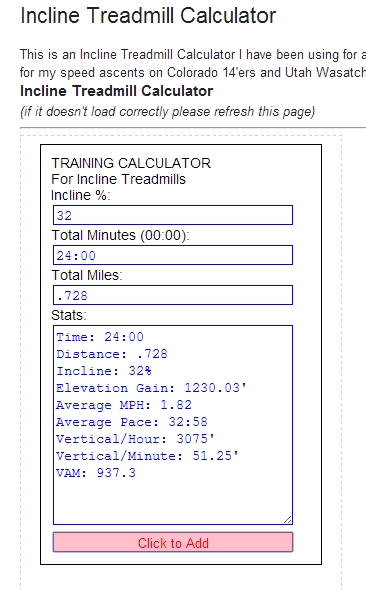
I used my Incline Treadmill Calculator [HERE] to get my stats from the back to back treadmill interval workouts.
Back to Back Treadmill Interval Workouts Number One
Back to Back Treadmill Interval Workouts Number Two
So now that I gave you all of this information about my own treadmill interval workouts, how does it relate to you? What information can you get from my examples?
Warm Up and Cool Down Sufficiently
Be ready to change gears in a heartbeat if needed
Get enough rest in the lower speed phases of your intervals
Mix it up with different inclinations and speeds
Set targets and goals that apply to your larger goals
Do a variety of training protocols over the weeks
Be sure to keep your eyes open to the big picture
I’ve been doing different types of treadmill interval workouts depending on my current goals, on what altitude I’m at, and what kind of treadmill I’m on. It also depends on what my previous workouts were that week as well as what workouts are coming up in the next week.
Don’t be afraid of these workouts. They’re as easy or difficult as you want to make them. Start out slow and work your way up. Remember that most of the running information you find on the internet, deep down inside, is meant for people running 7:30 miles. If that doesn’t apply to you then sort through it and find what you need and make it work for you.
If you have any questions, comment here or on my Facebook page. I’m happy to offer little suggestions or advice, and if you subscribe to the blog (little box to the upper right) you’ll get notices whenever I post a new article here.
Interval Training is perfect for the stop and go nature of rock climbing
I’ve been eating this for quite some time, and have shared my protein oatmeal recipe with several of my friends and those I consult as a trainer. In fact, this recipe is one of the primary reasons that I use the protein that I do – BSN SYNTHA-6 Protein Powder. When you mix most protein powders into something hot, like this protein oatmeal recipe they tend to coagulate. The protein gels up like cooking an egg white and the taste is usually awful. The BSN proteins seem to tolerate the heat better. Just be sure not to actually boil it. I’ll explain the sequence I use below.
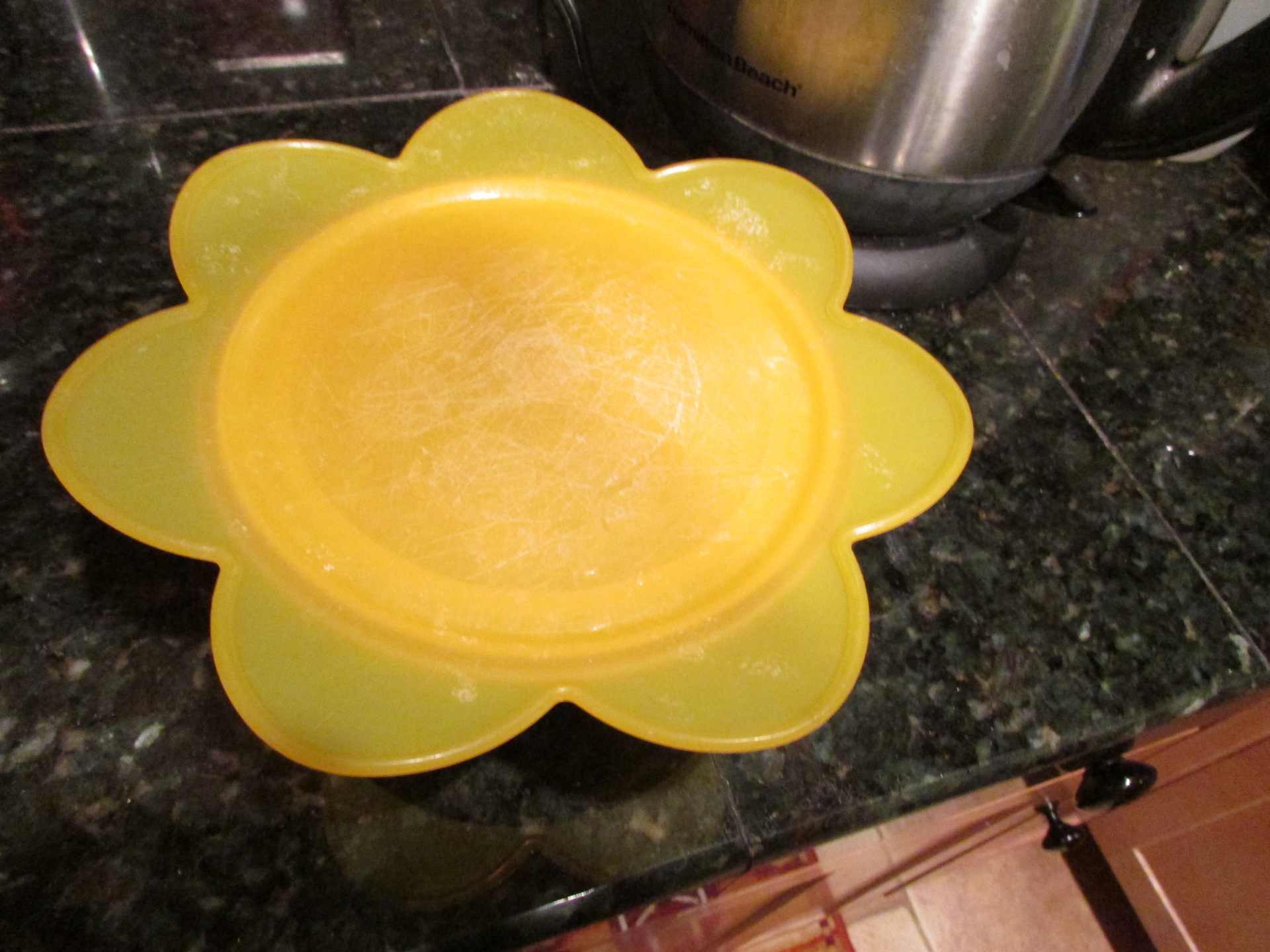
I’m using an electric kettle for the relative speed and efficiency in boiling a cup of water. You’ll see in the photo I also have a ceramic bowl and hidden is a small round plastic plate that I’ll use as a cover. Off to the side is my battery powered gram scale.
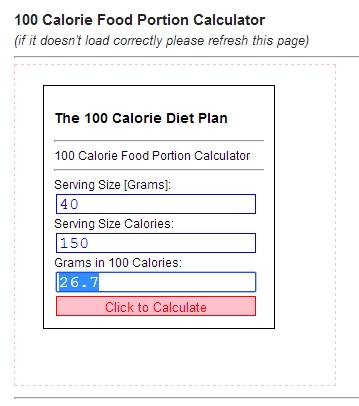
To weigh out my portions I need to know how much 100 calories is for each of the ingredients. I’m going to suggest my Online 100 Calorie Portion Food Calculator [HERE]. I read the backs of each of the packages to get the information on a serving size in grams, and how many calories that is. Plug that into the calculator and you get the grams in a 100 calorie portion. That’s a lot of raisins so I cut that in half for a 50 calorie portion.
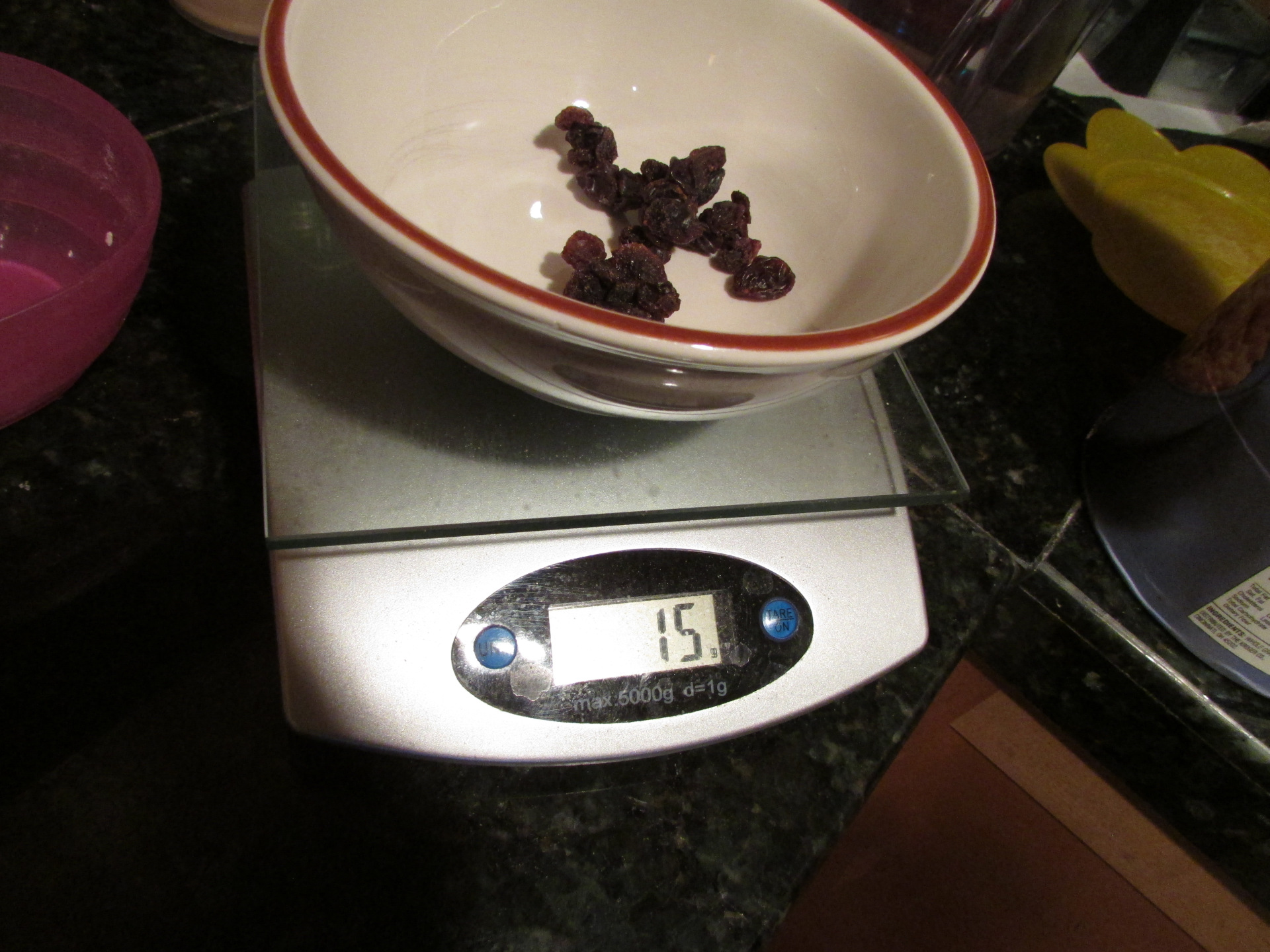
100 calories of raisins is 30.8 gm. Cut that in half to 15 gm for 50 calories.
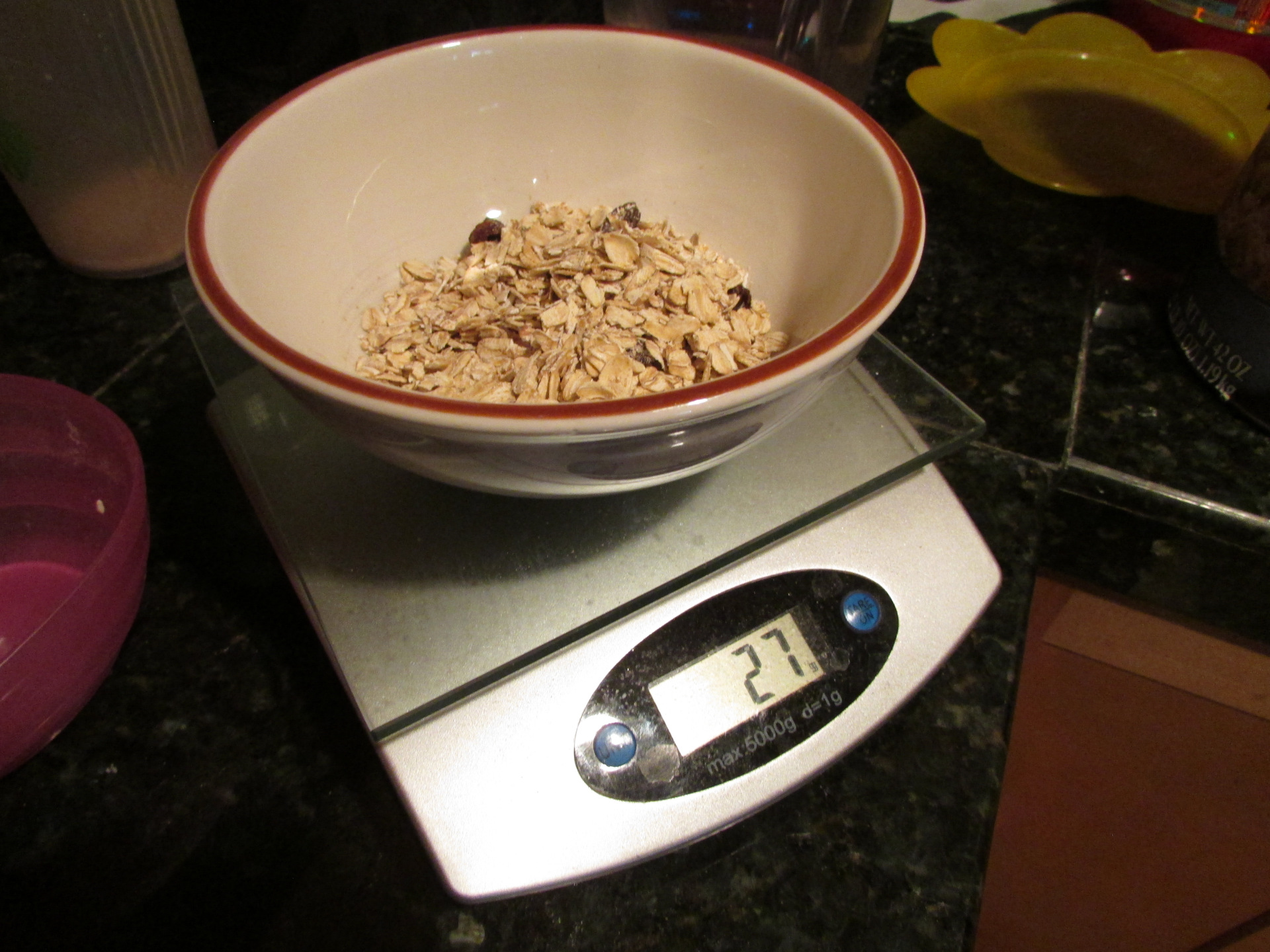
100 calories of oats is 26.7 grams. My scale doesn’t do decimals, so it’s 26 gm.
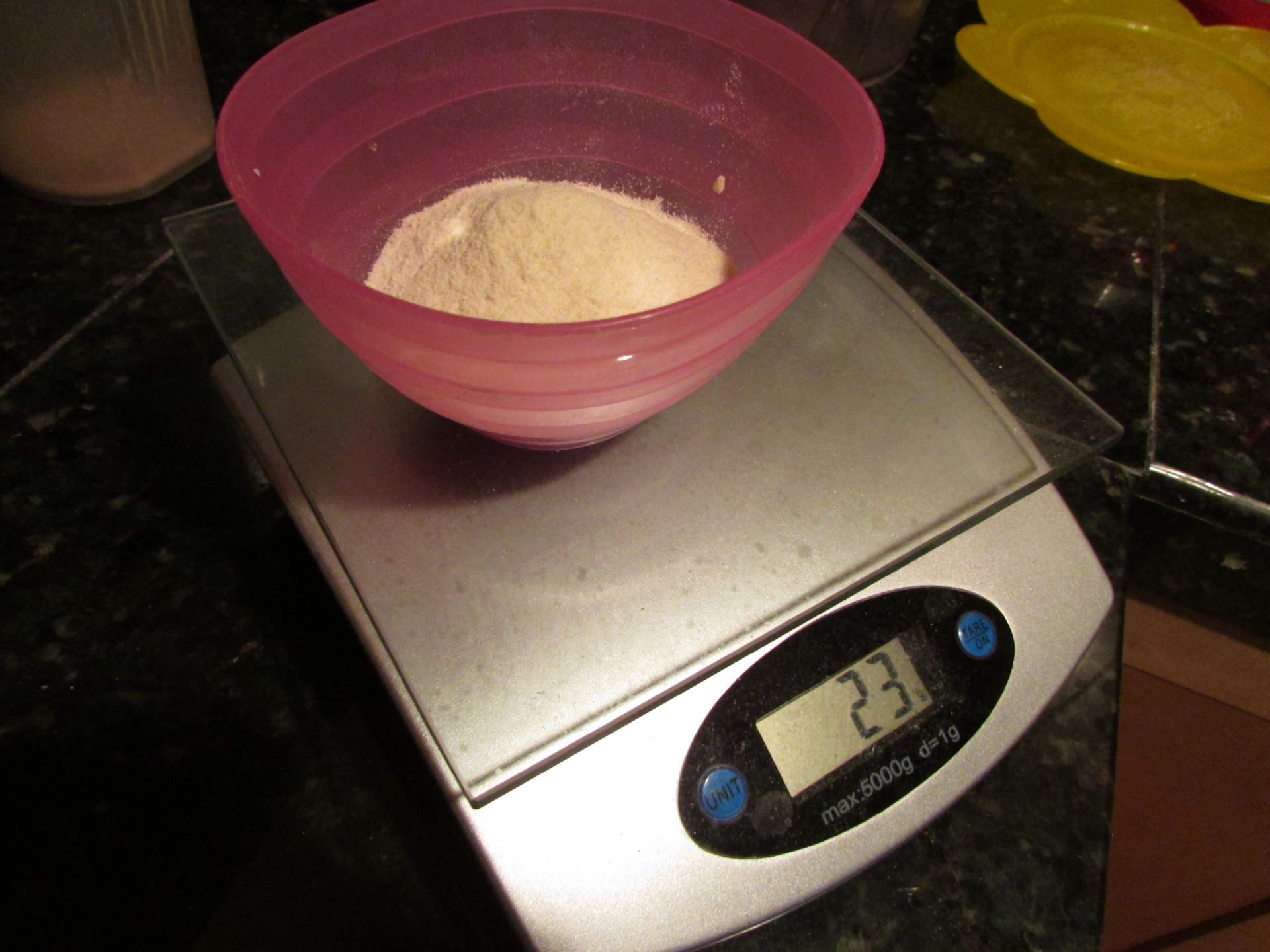
100 calories of BSN Syntha-6 is 23.5 grams so 23 gm.
The above gallery shows the results of calculating a 100 calorie portion for each of the ingredients in my protein oatmeal recipe. Note that as I stipulate in my manual “The 100 Calorie Diet Plan” always round down if fat loss is your goal. Check it out [HERE] if you’re curious.
After turning on the kettle to boil, I weighed out the raisins and oatmeal into the ceramic bowl and then the BSN protein into a small plastic cup. Be sure to zero your scale between items if you’re weighing more than one and don’t make mistakes. It’s hard to separate out some ingredients if you’re weighing them all together. Sprinkle cinnamon on top of the uncooked oats. I like to have the flavor cooked in but some people might prefer to add it in on top afterward.
50 calories of raisins weighed out
100 calories of oats weighed out
BSN Protein 100 calorie portion weighed out
Cinnamon sprinkled on top
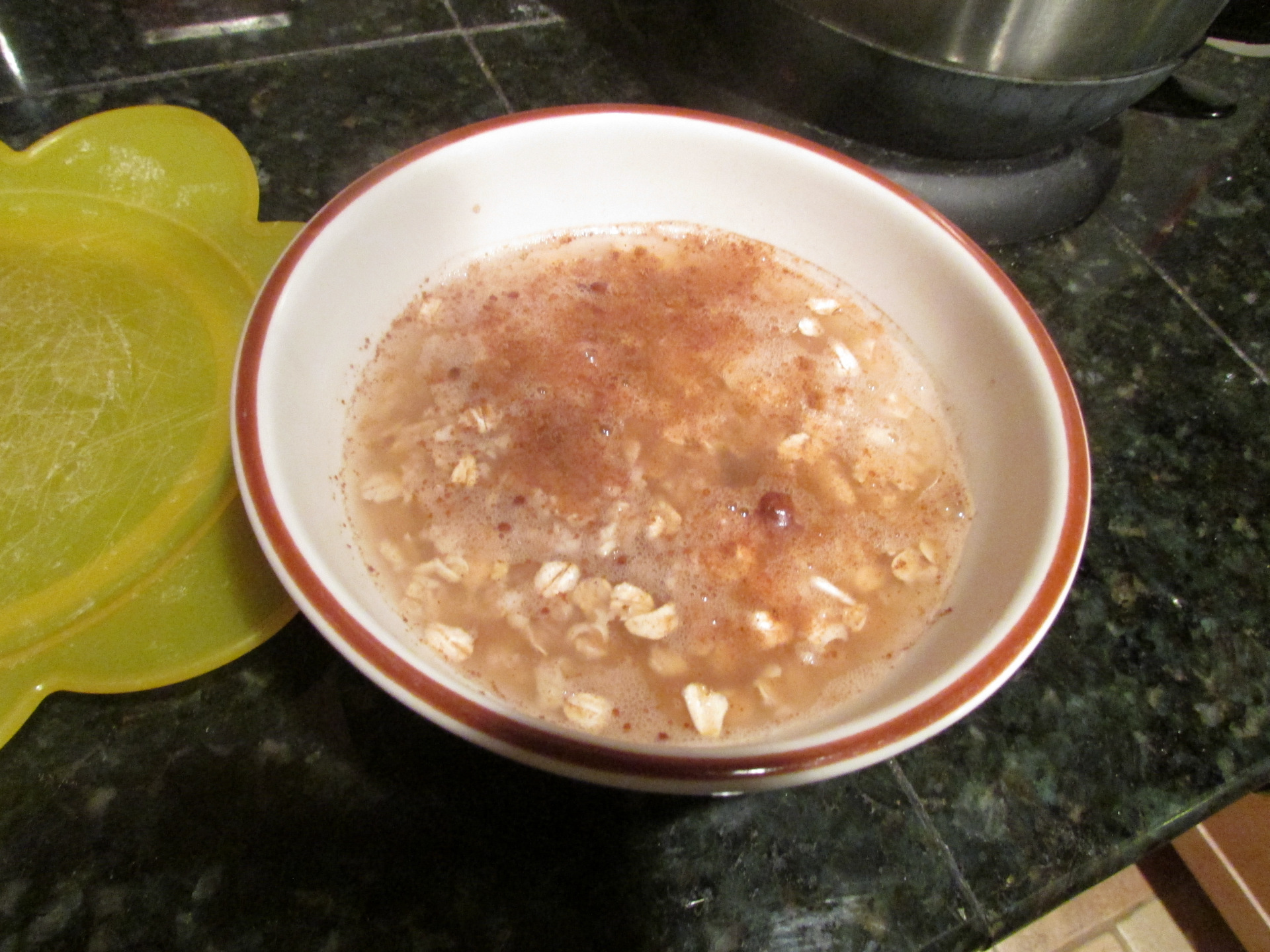
The gallery above shows this portion of the process up to when I pour the boiling water on top. Add in about a cup of water, to taste, allowing for the oats and raisins to absorb some and swell up. Make sure there is enough water to stir in the protein. Put a plastic plate on top to allow the hot water to steam the oats and raisins and “cook” them through.
Pour in about a cup of boiling water to cook the oats
Cover and let steam through to cook the oats and raisins
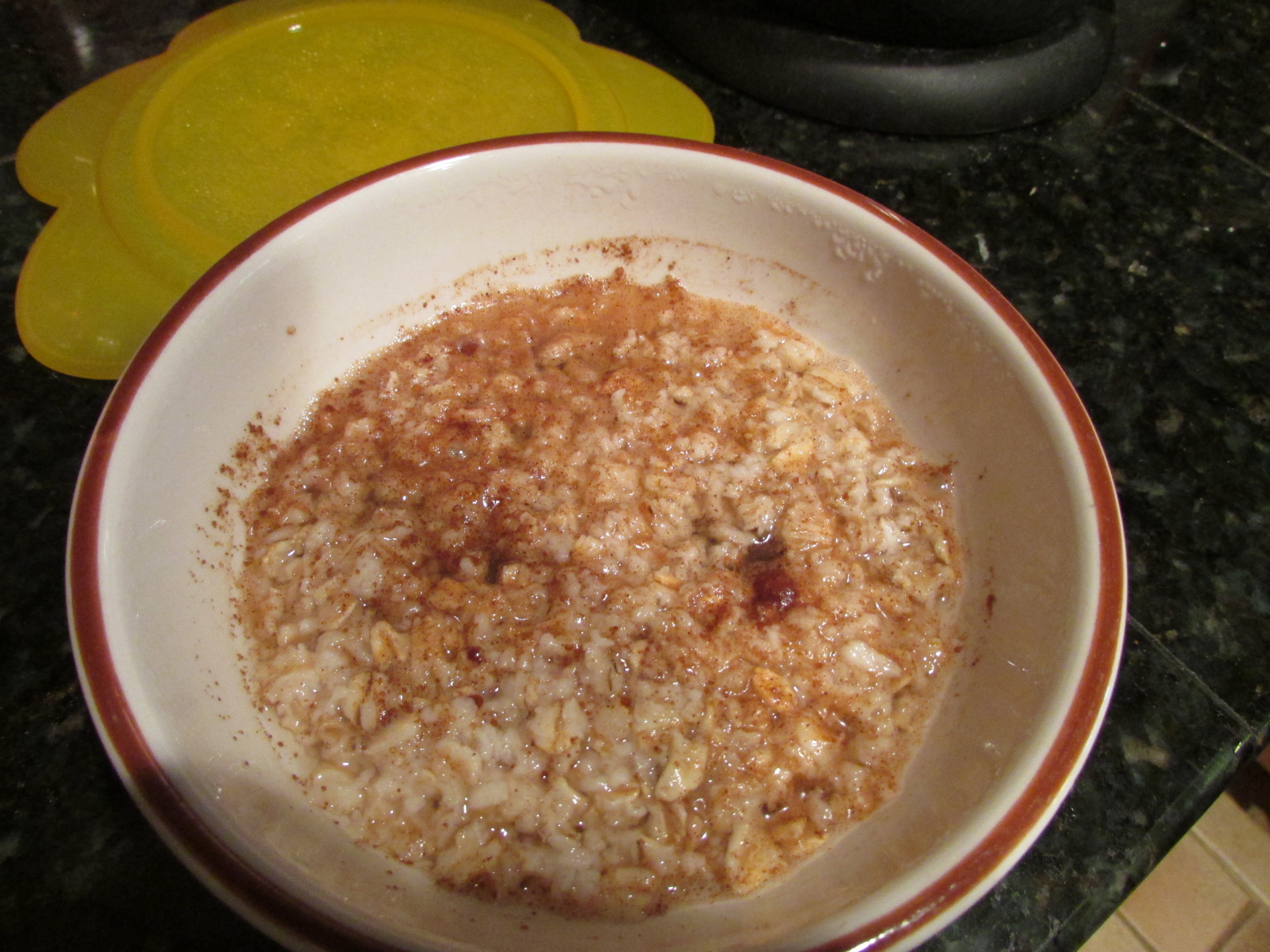
Cooked oats and raisins and cinnamon
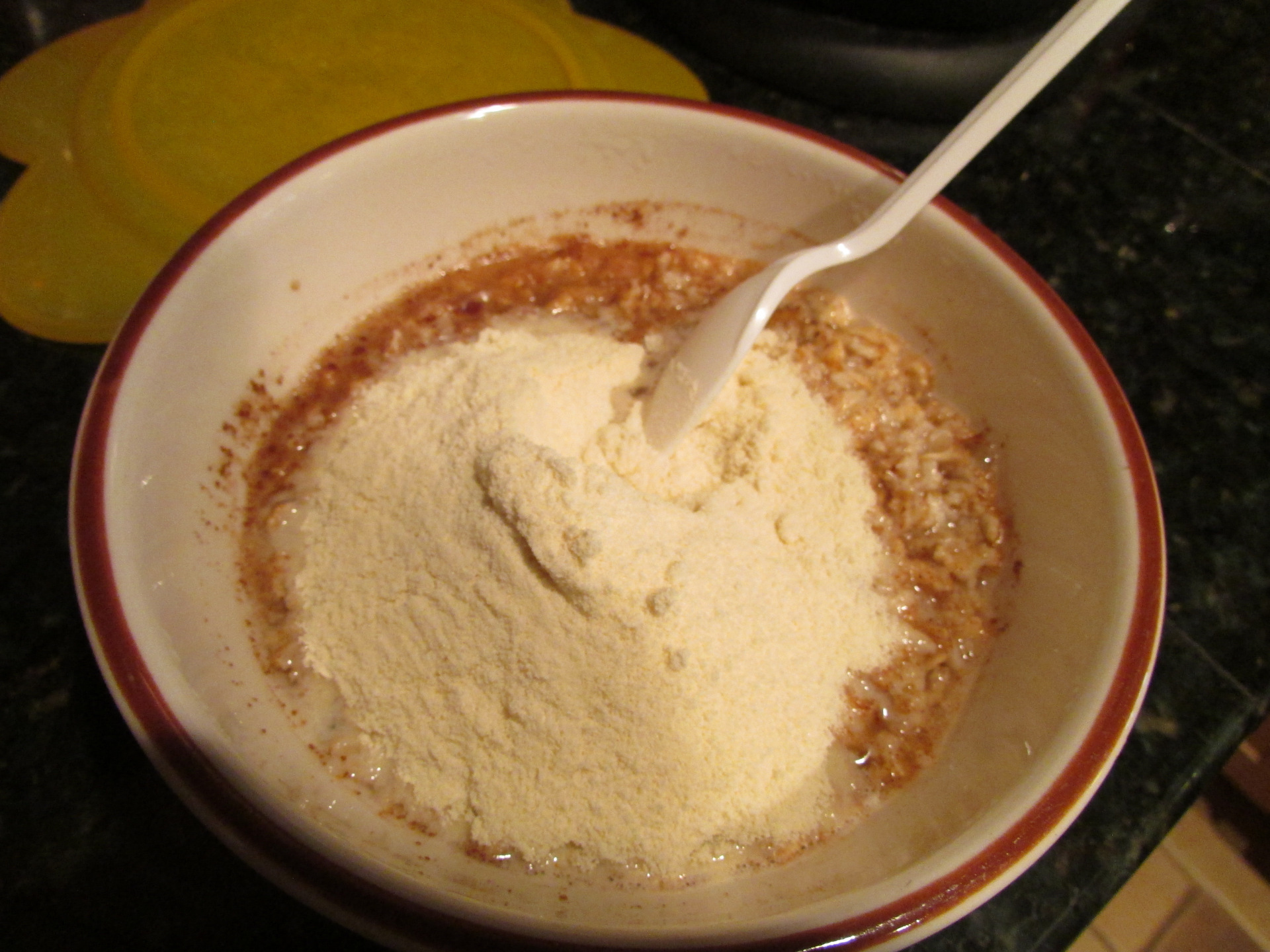
Stir the BSN protein into the cooked oats and stir
Let it steam through for a few minutes. Three to five minutes should do it. Take the improvised lid off and stir in the 100 calories of BSN protein. I prefer vanilla in this protein oatmeal recipe, but I have tried and liked strawberry too. In my opinion chocolate doesn’t taste all that good in oatmeal, but you might like it. When it’s all creamy and smooth start eating.
Results of the protein oatmeal recipe – great tasting 250 calorie meal
Experiment if you like to create your own protein oatmeal recipe. Post pics and instructions on my Facebook Page and let’s share these great tasting, low sugar, balanced meals that totally fit in with a food portion control system.


 and plugged it in for the stats. I spent quite a bit of time just under my 100% Heart Rate Zone. Do not do this! Unless of course you know for sure you can. The 200-AGE formula is just a starting point for average cardio training people to start with. When I’m rested I can spend time at 110%. I am guessing my actual Anaerobic Threshold to be around 166. I will get the blood test sometime but it’s much more difficult than it needs to be in CO. In UT it was a piece of cake and I didn’t take advantage of it while I was there. Maybe on a business trip…


 . When you mix most protein powders into something hot, like this protein oatmeal recipe they tend to coagulate. The protein gels up like cooking an egg white and the taste is usually awful. The BSN proteins seem to tolerate the heat better. Just be sure not to actually boil it. I’ll explain the sequence I use below.